Shizatong · Illustrated scam prevention
New illustrations 21–30

Understand the trap. Keep control of your decisions.

10 text-free scenario illustrations. View the image, then expand the process, response and sources as needed. Language changes keep your current page.

All six languages share the same text-free images. This is not an official collaboration with 165.

Fake loans: keep your bank card to yourself. “Improving” account activity may turn your account into a payment collection tool
Illustration 25 · text-free

Fake loans: keep your bank card to yourself

“Improving” account activity may turn your account into a payment collection tool

Expand the four stages and response
  1. Quick loan approval advertisement: Promises approval even with poor credit
  2. Account activity manipulation claim: Falsely claims that altering the account's appearance helps approval
  3. Card and credentials requested: Requests a bank card and login information
  4. Account misused: The account may receive or transfer unexplained funds

Key warning: Handing over financial tools may create legal and financial risks; involvement in an offence must be assessed case by case.

Break the chain: Contact a legitimate financial institution yourself; do not hand over cards or passwords

Official sources and scopeCriminal Investigation Bureau · fake loans and account activity manipulation

Source checked: 2026-10-01. The image is an educational illustration, not official certification. Roles and sequence vary by case. Website text is an editorial summary; citing a source does not imply official endorsement of every visual detail.

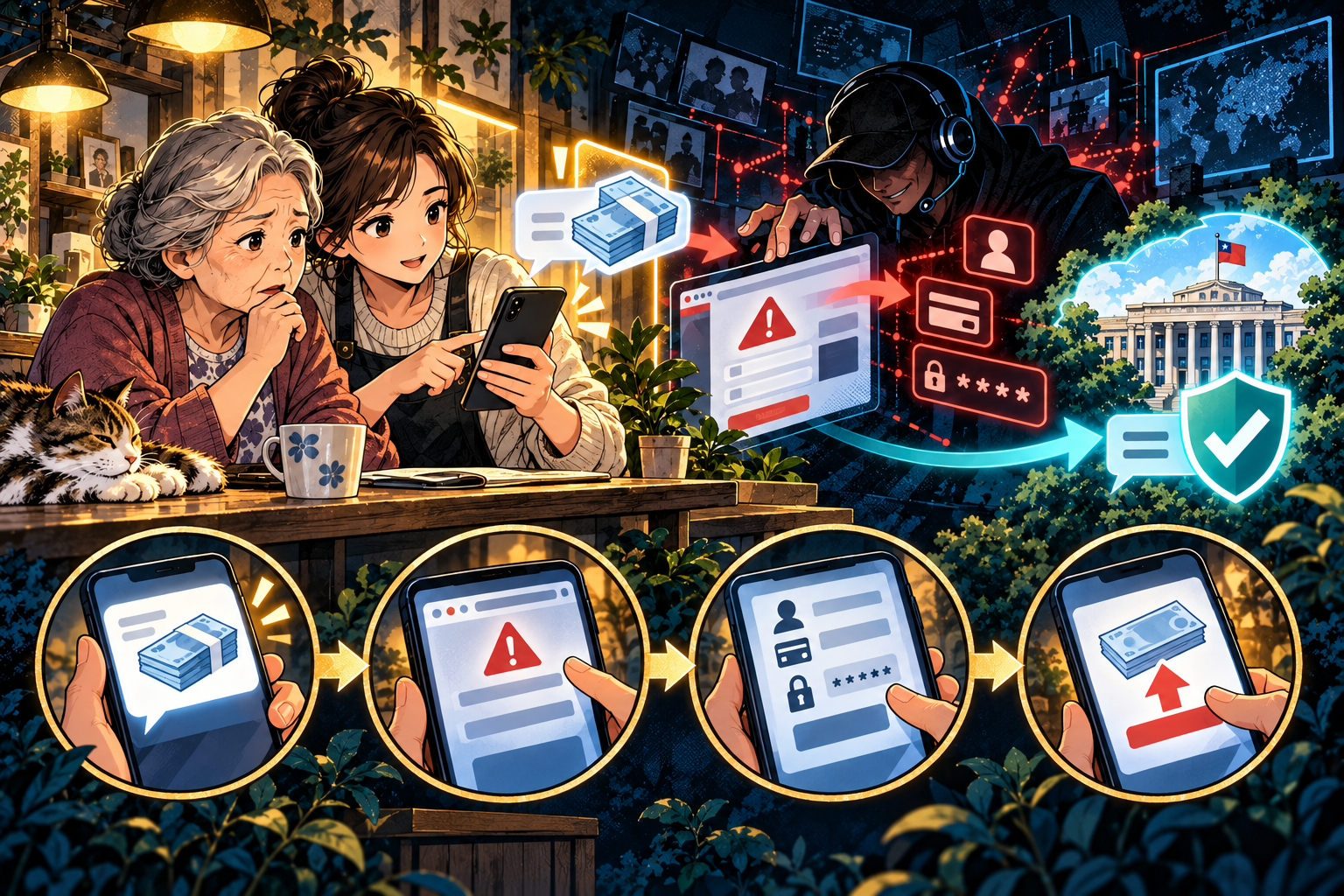
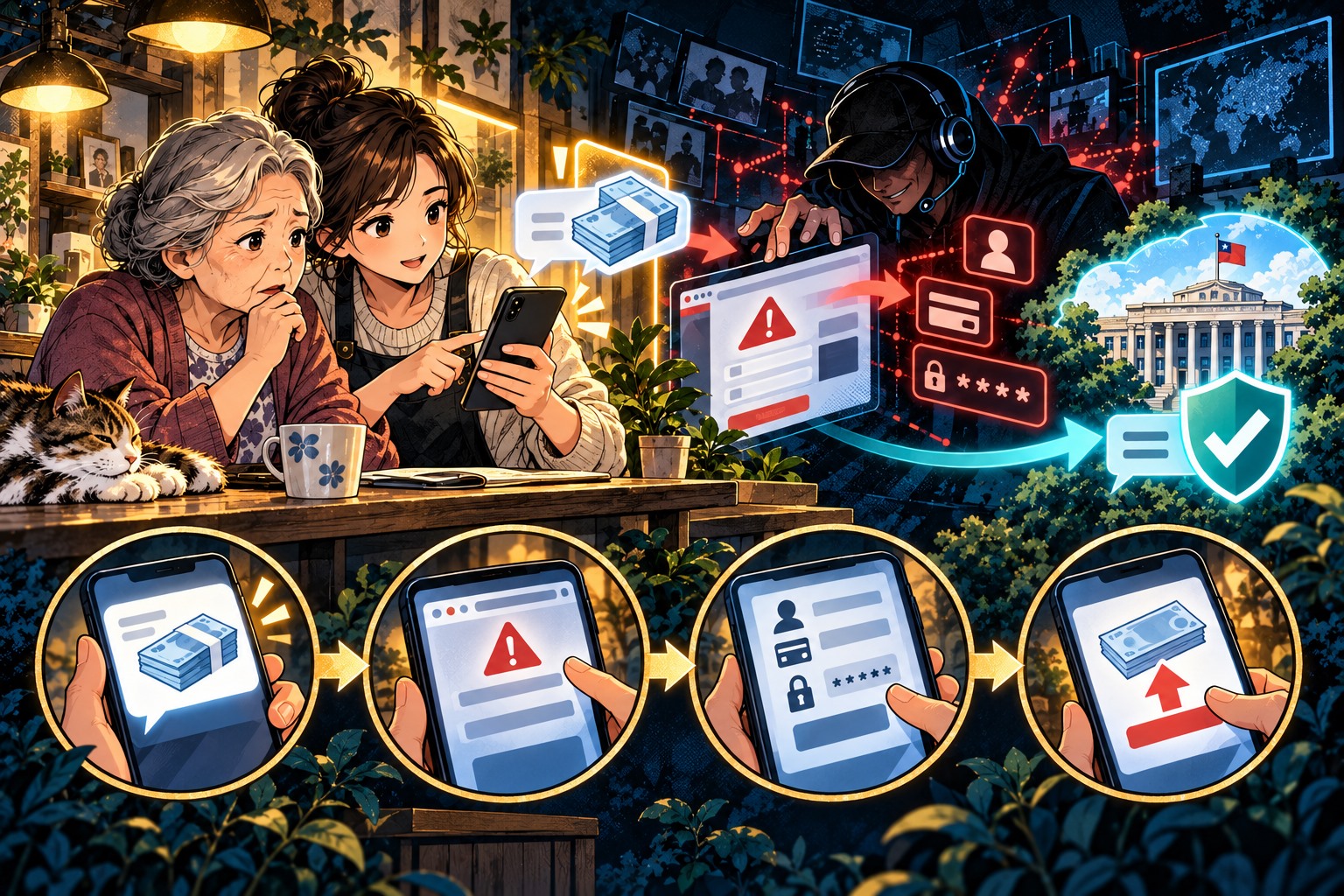
Expiring points: even a small payment can be phishing. A free reward that asks for your credit card details?
Illustration 26 · text-free

Expiring points: even a small payment can be phishing

A free reward that asks for your credit card details?

Expand the four stages and response
  1. Expiry message: Creates urgency by claiming points will expire
  2. Fake redemption page: A counterfeit reward page prompts action
  3. Card details or verification code requested: Requests payment information or a verification code
  4. Transaction authorised: Information is exposed or the user is induced to confirm a transaction

Key warning: Check the actual purpose and amount of the transaction; large transfers are not the only transactions that require caution.

Break the chain: Open the official app yourself to check points; do not follow message links

Official sources and scopeCriminal Investigation Bureau · phishing through points and service notices

Source checked: 2026-10-01. The image is an educational illustration, not official certification. Roles and sequence vary by case. Website text is an editorial summary; citing a source does not imply official endorsement of every visual detail.

Fake payment notices: receiving money should not require a transfer first. Check benefit or cash-payment claims through official channels
Illustration 27 · text-free

Fake payment notices: receiving money should not require a transfer first

Check benefit or cash-payment claims through official channels

Expand the four stages and response
  1. Money collection notice: An offer to receive money attracts attention
  2. Redirect to a fake website: An imitation agency page lowers suspicion
  3. Financial information requested: Requests card details or sensitive information
  4. Transfer demanded: Verification or processing fees are used to induce payment

Key warning: This illustration explains fraudulent money-claim notices; it does not mean that a particular benefit is currently available.

Break the chain: Do not open unfamiliar money-claim links; check official announcements yourself

Official sources and scopeCriminal Investigation Bureau · fake money-claim websites and phishing messages

Source checked: 2026-10-01. The image is an educational illustration, not official certification. Roles and sequence vary by case. Website text is an editorial summary; citing a source does not imply official endorsement of every visual detail.

“Help me vote”: do not hand over your account. A familiar person's message may come from a stolen account
Illustration 28 · text-free

“Help me vote”: do not hand over your account

A familiar person's message may come from a stolen account

Expand the four stages and response
  1. Voting invitation from a friend or relative: Uses an existing relationship to gain trust
  2. Fake login page: Helping with a vote turns into a login request
  3. Credentials and verification code stolen: Prompts disclosure of login details or authentication codes
  4. Account stolen and used to request loans: The attacker takes over the account and scams its contacts

Key warning: A familiar account name and photo are no reason to skip confirmation through another channel.

Break the chain: Confirm through another channel first; do not share verification codes

Official sources and scopeCriminal Investigation Bureau · voting requests and account theft

Source checked: 2026-10-01. The image is an educational illustration, not official certification. Roles and sequence vary by case. Website text is an editorial summary; citing a source does not imply official endorsement of every visual detail.