Shizatong · Illustrated scam prevention
New illustrations 21–30

Understand the trap. Keep control of your decisions.

10 text-free scenario illustrations. View the image, then expand the process, response and sources as needed. Language changes keep your current page.

All six languages share the same text-free images. This is not an official collaboration with 165.

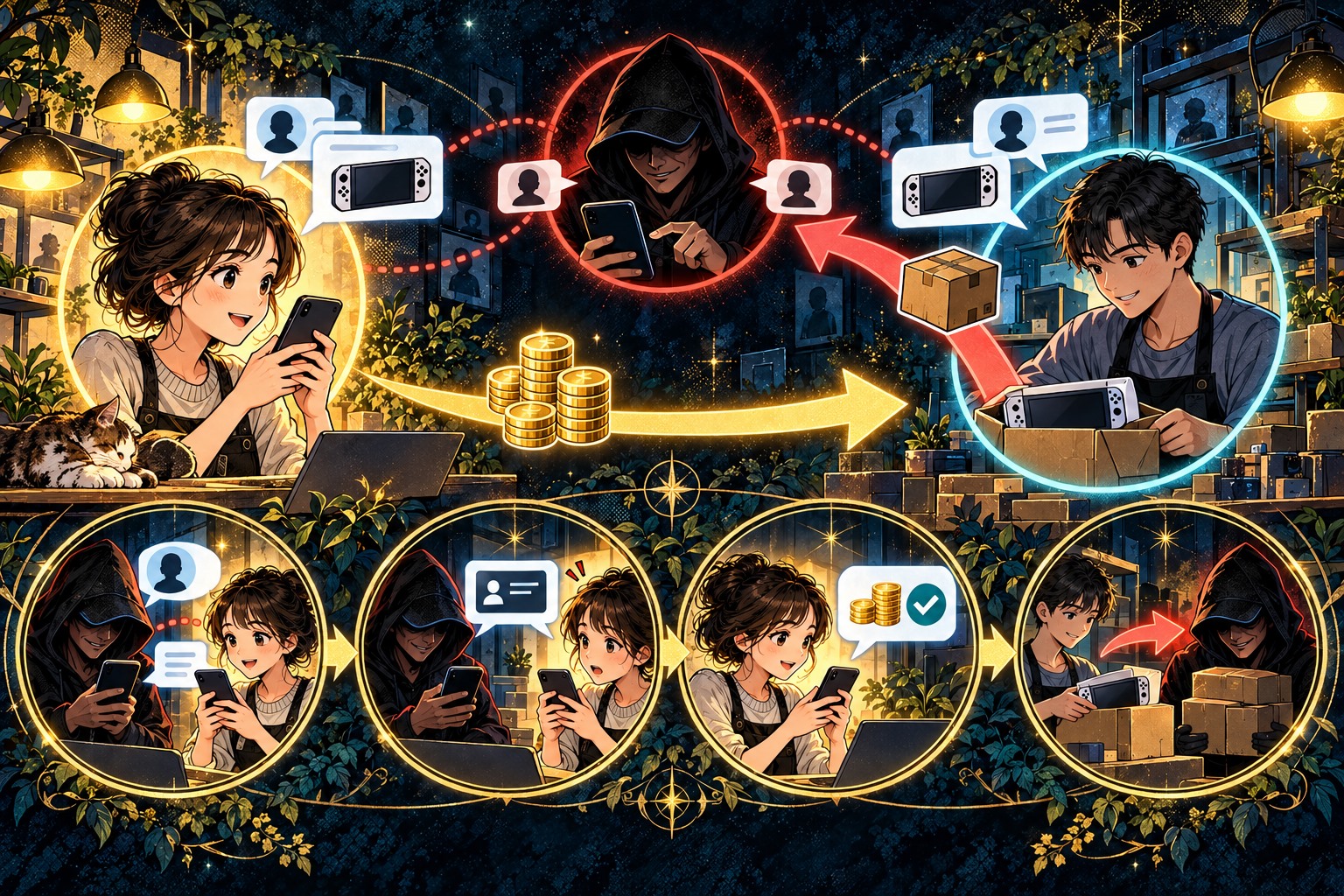
Game item trading: a deposit is no guarantee. A specified trading platform may be a fake support setup
Illustration 29 · text-free

Game item trading: a deposit is no guarantee

A specified trading platform may be a fake support setup

Expand the four stages and response
  1. High-priced purchase offer: Account or virtual-item trading attracts players
  2. Redirect to a fake platform: Specifies a trading site that appears to offer protection
  3. Unfreezing fee demanded: Support claims a fee is needed to release payment
  4. More payments, but no money recovered: New excuses are used to demand further payments

Key warning: A platform interface and support chat do not prove trustworthiness; do not pay more just because you have already paid.

Break the chain: Check whether the platform is genuine; do not pay again to “unfreeze” funds

Official sources and scopeKaohsiung City Criminal Investigation Corps · game trading and fake platforms

Source checked: 2026-10-01. The image is an educational illustration, not official certification. Roles and sequence vary by case. Website text is an editorial summary; citing a source does not imply official endorsement of every visual detail.
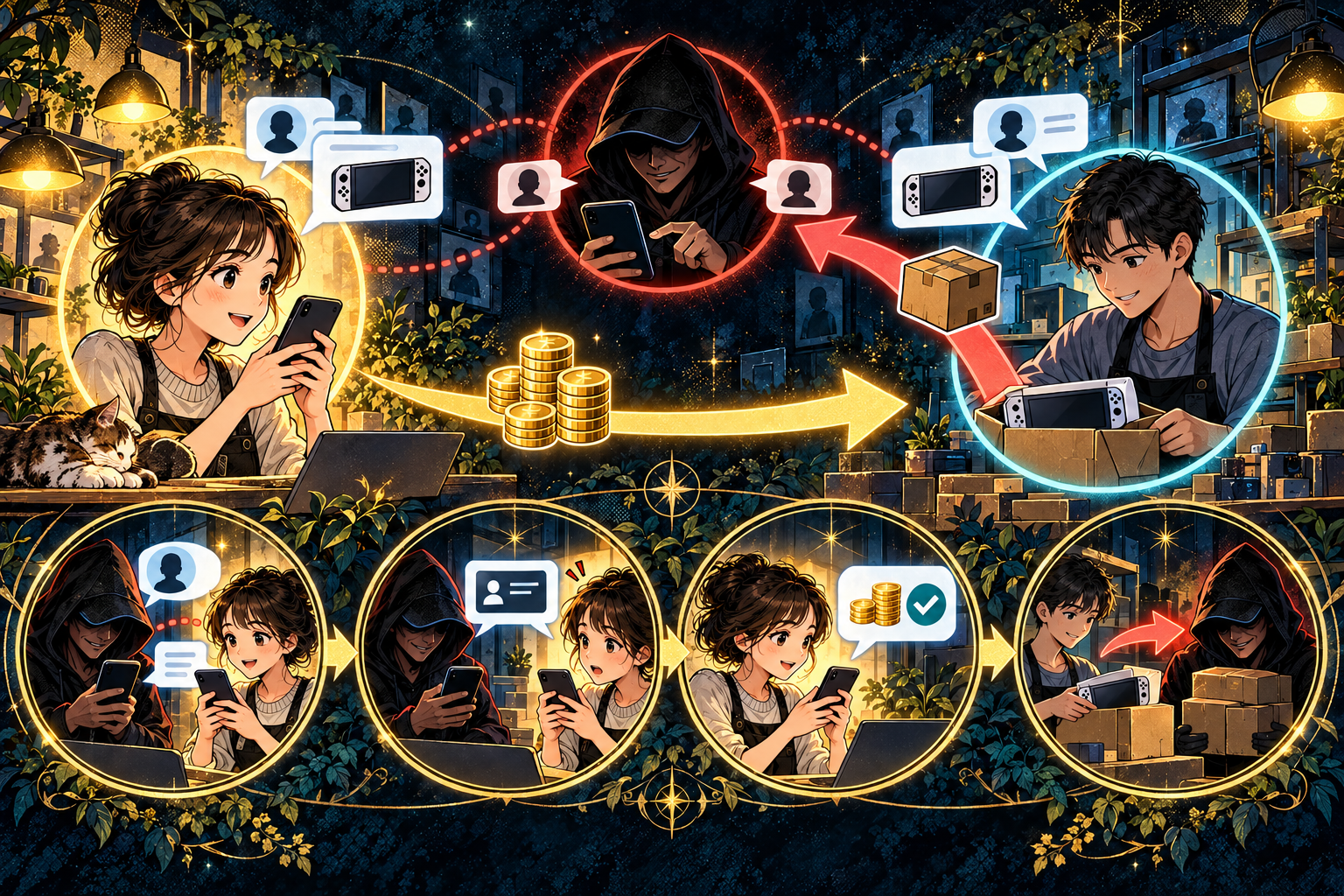

Three-party fraud: money and goods take different routes. The payment recipient may not be the person you are speaking to
Illustration 30 · text-free

Three-party fraud: money and goods take different routes

The payment recipient may not be the person you are speaking to

Expand the four stages and response
  1. Impersonation: The scammer plays a trading role with both buyer and seller
  2. Third-party account supplied: The buyer is told to pay another seller's account
  3. Buyer pays: The seller receives money from the real buyer
  4. Goods go to the scammer: The scammer receives the goods and disappears

Key warning: This is one form of three-party fraud: the buyer pays the seller, but the seller ships the goods to the scammer.

Break the chain: Check the trading parties and payment details; do not refund on a stranger's instructions

Official sources and scopeCriminal Investigation Bureau · three-party fraud: one person orders, another pays

Source checked: 2026-10-01. The image is an educational illustration, not official certification. Roles and sequence vary by case. Website text is an editorial summary; citing a source does not imply official endorsement of every visual detail.