Multilingual visual scam guide
20 diagrams explain roles, persuasion and money flows. Choose one topic at a time.
Open diagramLanguage editing and field checks completed. Review by a human native-language editor is pending. Not an official translation.
If it has already happened: choose the next step
Keep necessary evidence. Do not include passwords, one-time codes, complete ID documents or intimate images in public reports or requests for help. These are initial steps, not a guarantee of recovery.
You paid or transferred money
Contact your bank or payment provider yourself immediately. Explain the suspected scam and ask what measures are possible. Keep the time, amount, recipient details and transaction ID; ask police or 165 for help. Do not pay further deposits, taxes or recovery fees.
You shared passwords, codes or card details
Use a trusted device to open the official website or app. Follow the provider’s instructions for securing the account and active sessions. Contact the financial institution immediately if banking, cards or payments are involved. Address other accounts using the same password separately. Do not use a reset link sent by the caller.
You installed remote software or shared your screen
End the connection and remote control. Use another trusted device to contact your bank and 165. Save the software name, messages and installation time, and seek trusted technical support. A factory reset removes data and some evidence; arrange preservation and recovery before resetting.
You face threats or intimate-image blackmail
Do not pay or send more images. Save accounts, URLs and threatening messages, ask police for help and report through the platform. For child protection or sexual violence, seek a trusted adult and 113; call 110 for immediate danger. Do not forward intimate images just to report the incident.
Women
Romance and investment: trust first, pressure later
Warning signs
Someone quickly talks about love, then directs you to an investment group or platform. A small successful withdrawal does not prove it is genuine.
What to do now
Pause payments and independently check the platform and identity. Do not pay extra tax, a deposit or an unlocking fee to withdraw.
Intimate-image blackmail: fear is not a reason to pay
Warning signs
Someone threatens to expose images or personal details unless you pay, send more images or stay silent. The threat is not your fault.
What to do now
Save the account, messages and threats. Do not pay or send more images. Ask the police for help; call 113 for sexual violence or protection needs.
Shopping refunds: fake support wants account access
Warning signs
A caller claims a duplicate charge, membership error or refund and asks for verification codes or remote-control software.
What to do now
End the conversation and contact the retailer and bank yourself. Do not share codes. If you shared financial details or paid, contact your bank and 165 immediately.
Older adults
Fake police: a ‘supervised account’ does not protect money
Warning signs
A caller claims you are under investigation and demands secrecy, a transfer or cash collection at home. Caller IDs and documents can be impersonated.
What to do now
Hang up and find the agency’s number yourself. Do not hand over money. Call 110 if someone comes to collect it or there is immediate danger.
Impersonated relatives: a familiar voice still needs checking
Warning signs
Someone claims a new number, an urgent loan or a kidnapping. Knowing a name or sounding like family does not prove identity.
What to do now
Call the person on a previously saved number or another channel before paying. Agree on a family verification method and keep its answer private.
Surveys and retirement investments: protect private routines
Warning signs
A survey asks about living alone, family schedules and savings, or an offer promises guaranteed high returns with a deadline.
What to do now
Decline unnecessary household and financial questions. Check an investment with someone you trust. Knowing your details does not make a caller trustworthy.
Children and teens
Game trades: points, accounts and fake payment screens
Warning signs
Cheap points, free skins or an account sale lead to advance payment, password requests, verification codes or unknown links.
What to do now
Use the platform’s approved trading process. Do not share credentials or make private transfers. Ask a trusted adult to check anything suspicious.
Gifts from online friends: never trade images for presents
Warning signs
A new friend quickly offers affection and asks for private chat, secrecy, intimate images or a meeting alone.
What to do now
Do not send intimate images or meet alone. If threatened, ask a trusted adult, the police or 113 for help. You do not have to handle it alone.
Easy earnings: your account is not someone else’s tool
Warning signs
An offer pays you to collect money, withdraw cash or rent out an account and asks for cards, login details or codes.
What to do now
Do not lend your account or transfer money for strangers. If you shared details, contact your bank and 165 and ask a trusted adult for help.
Migrant workers
Jobs and documents: a fake broker demands fees
Warning signs
Someone offers a job change, residence extension or protection from deportation in exchange for payment to a personal account, your passport or banking passwords.
What to do now
Check independently with your employer, a legitimate broker or the relevant authority. Call 1955 for labour advice or complaints. Do not let strangers control your bank account.
Remittances: a cheap rate still needs verification
Warning signs
A social-media transfer service, acquaintance or loan ad asks for payment to a personal account, upfront fees or verification codes.
What to do now
Use legitimate financial or remittance services you can verify independently. Check the recipient, fees and receipt. If you sent money, contact the provider, bank and 165 immediately.
Your language, a false identity
Warning signs
Someone posing as a compatriot, broker or official speaks your language and claims unpaid fees, a violation or a family emergency, demanding secret payment.
What to do now
Use a previously saved number to verify the person or organisation. Save messages and ask someone you trust for help. For labour issues, ask 1955.
01 · Scams operate as a chain of specialised roles
Scams operate as a chain of specialised roles
Different people work together, from first contact to collecting money.

Conceptual artwork, not real people, a crime scene or evidence verifying a specific case.
Outreach and data
Ads, social media and personal data create contact opportunities.
Scripts and platforms
False identities and fabricated screens create credibility.
Cash collection
Money is collected through transfers, withdrawals or in-person handovers.
Moving funds
Funds change hands, making tracing and interception harder.
Warning signs
Several callers do not mean several independent agencies have confirmed the story.
Protective action
Verify again whenever the person, platform or payment method changes.
These stages are educational summaries. Cases may differ in order and structure. They do not establish wrongdoing by any specific person or platform.
Official source (original may be in Traditional Chinese)02 · How fragments of your data support an impersonation
How fragments of your data support an impersonation
Knowing your name and transactions does not make someone genuine customer support.

Conceptual artwork, not real people, a crime scene or evidence verifying a specific case.
Obtaining data
Leaks or deceptive forms expose personal information.
Combining records
Names, bank details and purchase information are linked.
Targeted impersonation
Real details are quoted to gain trust.
Requesting action
Someone posing as support asks for verification codes or a transfer.
Warning signs
A caller who knows your details may still be an impostor.
Protective action
Hang up and contact the original retailer or bank yourself.
These stages are educational summaries. Cases may differ in order and structure. They do not establish wrongdoing by any specific person or platform.
Official source (original may be in Traditional Chinese)03 · Survey calls: protect your private routines
Survey calls: protect your private routines
An ordinary conversation can turn into questions about sensitive information.

Conceptual artwork, not real people, a crime scene or evidence verifying a specific case.
Survey introduction
Policy, brand or questionnaire topics lower suspicion.
Household questions
Questions reveal who lives with you and family schedules.
Financial questions
The caller asks about banks, pensions or savings.
Rewards for data
Gift vouchers encourage disclosure of precise personal details.
Warning signs
Surveys and gifts are not proof of crime. Unnecessary sensitive questions deserve caution.
Protective action
Decline questions about family routines and finances. Verify the survey organisation independently.
These stages are educational summaries. Cases may differ in order and structure. They do not establish wrongdoing by any specific person or platform.
Official source (original may be in Traditional Chinese)04 · Urgency, secrecy and authority: three forms of pressure
Urgency, secrecy and authority: three forms of pressure
Fear is created first, then outside verification is blocked.

Conceptual artwork, not real people, a crime scene or evidence verifying a specific case.
Claiming authority
The caller claims to be an agency, expert or supervisor.
Threatening trouble
They mention an investigation, frozen funds or a family emergency.
Blocking verification
They tell you not to inform family or your bank.
Demanding payment
They demand money or information within a short deadline.
Warning signs
The harder someone makes verification, the more important it is to stop.
Protective action
Leave the conversation and ask someone you trust or 165 for help.
These stages are educational summaries. Cases may differ in order and structure. They do not establish wrongdoing by any specific person or platform.
Official source (original may be in Traditional Chinese)05 · A polished investment screen can be a staged display
A polished investment screen can be a staged display
Displayed profits and a working login do not prove real transactions.

Conceptual artwork, not real people, a crime scene or evidence verifying a specific case.
Borrowed credibility
Celebrity, company or institution identities are borrowed.
Fabricated interface
A website or app displays apparent account gains.
A small payout
A small payout makes withdrawals seem possible.
Withdrawal barriers
Larger withdrawals trigger new fees and restrictions.
Warning signs
On-screen numbers cannot replace checks on actual funds and regulatory status.
Protective action
Verify through official channels of the regulator and financial institution.
These stages are educational summaries. Cases may differ in order and structure. They do not establish wrongdoing by any specific person or platform.
Official source (original may be in Traditional Chinese)06 · Cash couriers bring an online script to your door
Cash couriers bring an online script to your door
Uniforms, ID badges and receipts do not guarantee who is collecting money.
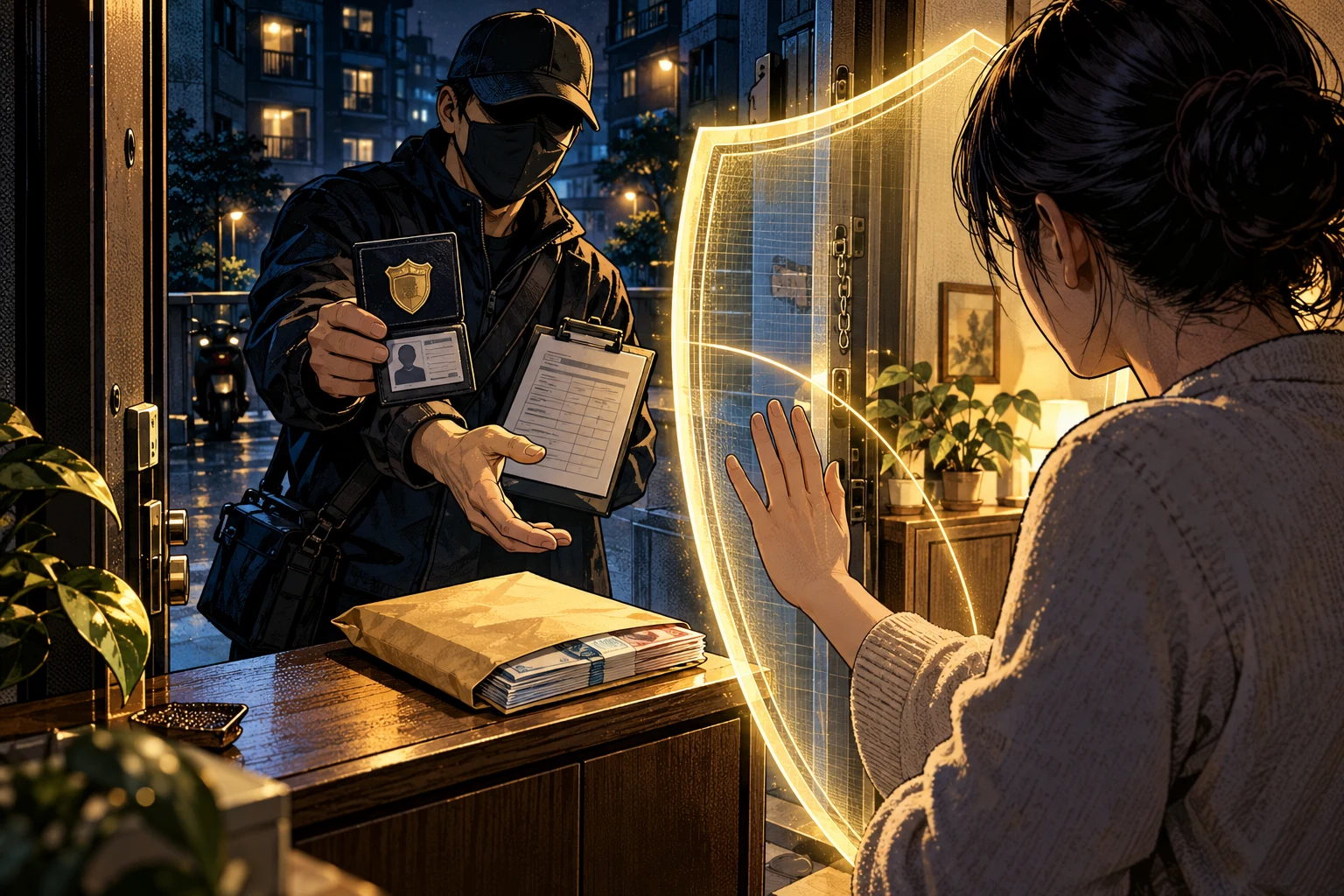
Conceptual artwork, not real people, a crime scene or evidence verifying a specific case.
Online persuasion
A fake investment or police story gains trust.
Arranging a handover
A supposed representative is sent to collect money at home.
Props for credibility
Identification, contracts and receipts are shown.
Taking valuables
The collector leaves with cash or gold.
Warning signs
A stranger collecting assets for ‘supervision’ or investment at home is a serious warning sign.
Protective action
Do not hand anything over. Call 110 if someone pressures you at your door or there is danger.
These stages are educational summaries. Cases may differ in order and structure. They do not establish wrongdoing by any specific person or platform.
Official source (original may be in Traditional Chinese)07 · Funds change hands: act quickly to limit losses
Funds change hands: act quickly to limit losses
Money may move between accounts and assets. Recovery is not guaranteed.

Conceptual artwork, not real people, a crime scene or evidence verifying a specific case.
Receiving money
Money enters through accounts, cash handovers or specified wallets.
Repeated transfers
Other people help withdraw and move the money.
Changing assets
Some cases involve virtual assets or illegal remittance operations.
Tracing and interception
Banks and police act on the actual financial trail.
Warning signs
Cryptocurrency and cross-border remittances are not crimes in themselves.
Protective action
If you paid, contact your bank immediately, save transaction records and report to police.
These stages are educational summaries. Cases may differ in order and structure. They do not establish wrongdoing by any specific person or platform.
Official source (original may be in Traditional Chinese)08 · Fake police exploit fear of being investigated
Fake police exploit fear of being investigated
Multiple call transfers and forged documents can be parts of the same script.

Conceptual artwork, not real people, a crime scene or evidence verifying a specific case.
False notification
Someone claims your identity was stolen or used for money laundering.
Transferred calls
Fake customer support transfers you to fake police and prosecutors.
Demanding secrecy
They prevent you from checking with family or bank staff.
Taking control of assets
They demand a transfer to a ‘safe account’ or an in-person handover.
Warning signs
Police and prosecutors do not tell you to give money to a supervised account or collector specified over the phone.
Protective action
Hang up. Find the agency’s number yourself or call 165 to check.
These stages are educational summaries. Cases may differ in order and structure. They do not establish wrongdoing by any specific person or platform.
Official source (original may be in Traditional Chinese)09 · ‘Guess who?’: do not supply an impostor’s identity
‘Guess who?’: do not supply an impostor’s identity
They let you guess a name, then use that relationship to ask for money.
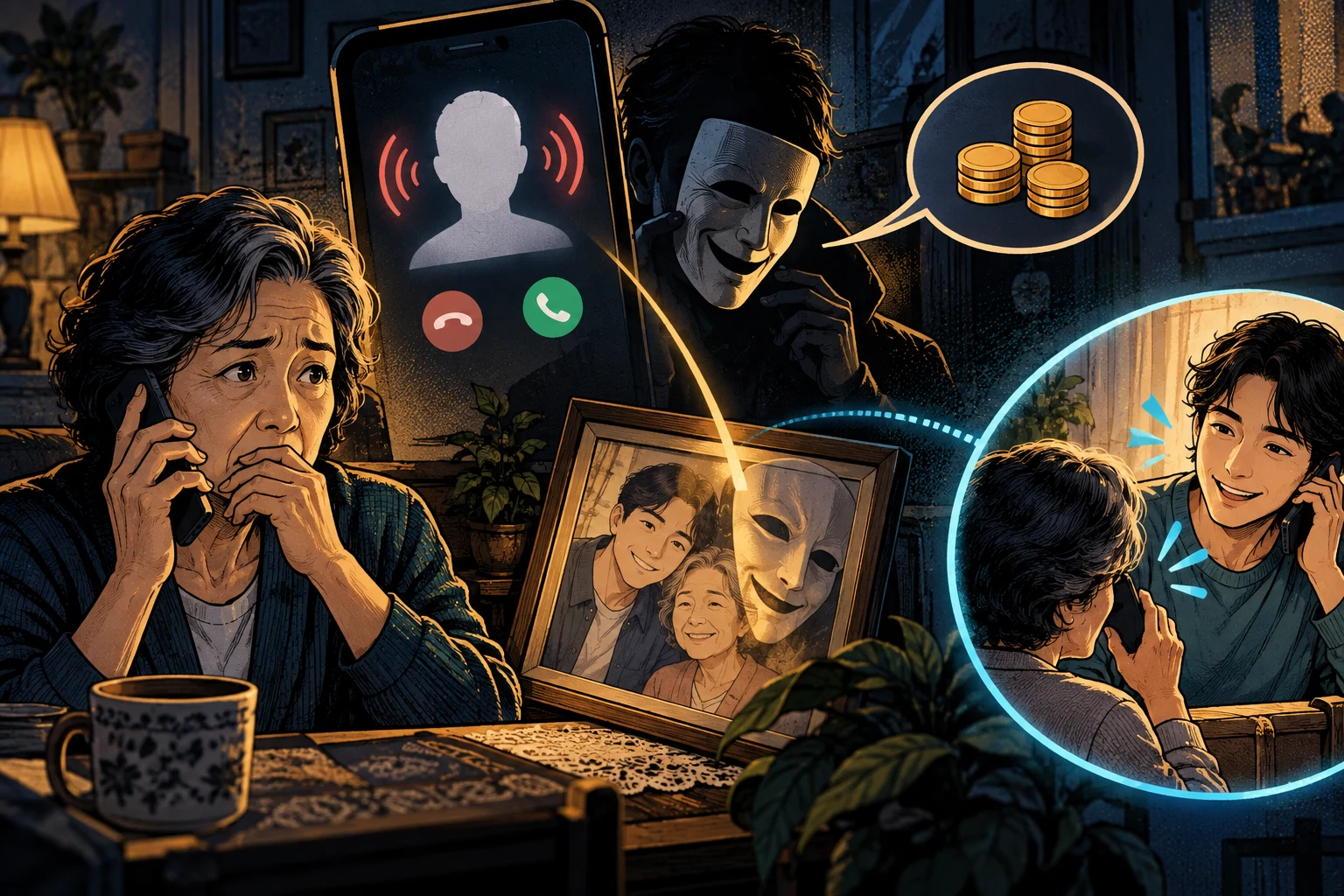
Conceptual artwork, not real people, a crime scene or evidence verifying a specific case.
A new number
They claim a changed phone or lost contact list.
Getting you to guess
They adopt the relative or friend’s name you suggest.
An urgent loan
Medical bills, debt or cash-flow problems justify a transfer.
Avoiding confirmation
They avoid callbacks through known channels and other checks.
Warning signs
You may have supplied the familiar name yourself.
Protective action
Call the previously saved number to confirm the person and the request.
These stages are educational summaries. Cases may differ in order and structure. They do not establish wrongdoing by any specific person or platform.
Official source (original may be in Traditional Chinese)10 · A familiar voice still needs a second channel
A familiar voice still needs a second channel
Voice, photos and video are not complete proof of identity.
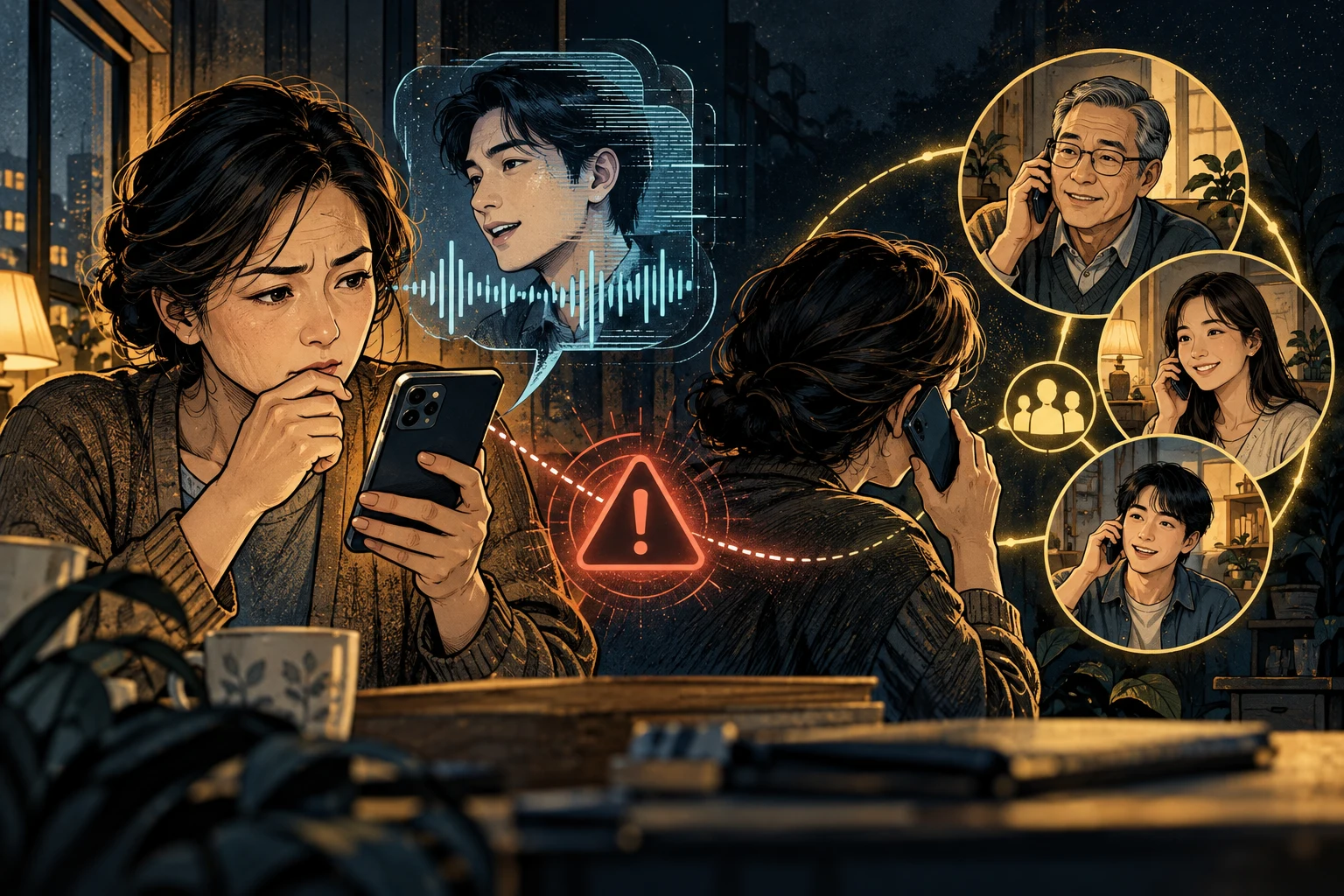
Conceptual artwork, not real people, a crime scene or evidence verifying a specific case.
Obtaining material
Public or leaked recordings and images can be misused.
Imitating a person
A familiar-looking image or voice is fabricated.
Emergency pressure
An accident, kidnapping or urgent payment is claimed.
Blocking checks
They demand secrecy or tell you not to hang up.
Warning signs
A family code word should be combined with known contact channels. It cannot guarantee safety alone.
Protective action
Use the old number to reach the person or another family member. Call 110 for immediate danger.
These stages are educational summaries. Cases may differ in order and structure. They do not establish wrongdoing by any specific person or platform.
Official source (original may be in Traditional Chinese)11 · Fake investments use small gains to encourage larger deposits
Fake investments use small gains to encourage larger deposits
A successful withdrawal does not prove a platform is trustworthy.
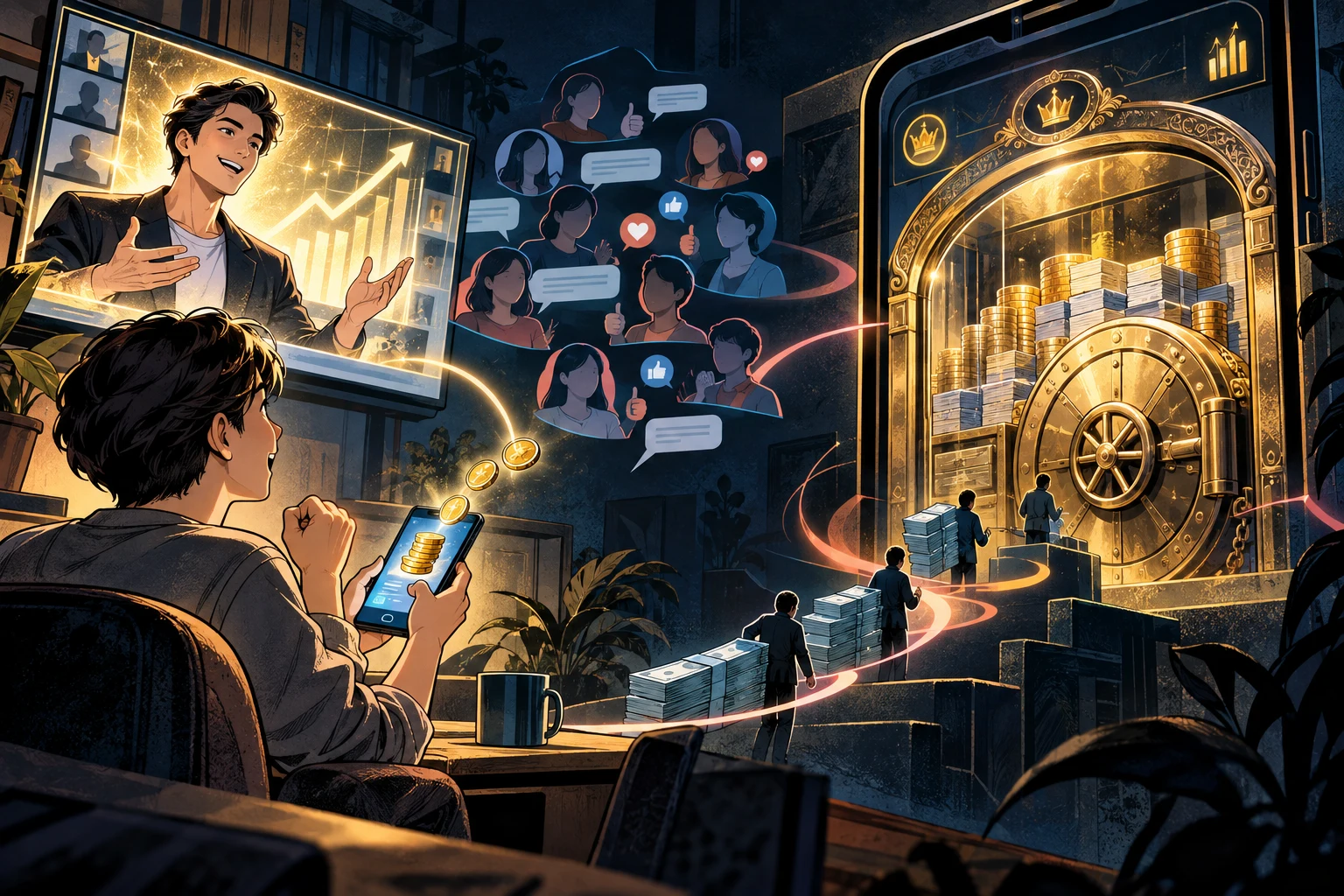
Conceptual artwork, not real people, a crime scene or evidence verifying a specific case.
Investment ads
Celebrities or high returns attract people into groups.
Group endorsement
A ‘teacher’, assistants and profit screenshots create confidence.
Small payouts
A small payout builds trust.
Large withdrawals blocked
After larger deposits, withdrawals fail and more fees are demanded.
Warning signs
Guaranteed profits, personal payment accounts and unfamiliar apps are warning signs.
Protective action
Stop adding money. Save group messages and transaction evidence.
These stages are educational summaries. Cases may differ in order and structure. They do not establish wrongdoing by any specific person or platform.
Official source (original may be in Traditional Chinese)12 · Dating to livestreaming: money does not prove affection
Dating to livestreaming: money does not prove affection
As the relationship grows, more payment conditions appear.

Conceptual artwork, not real people, a crime scene or evidence verifying a specific case.
Intense attention
Romantic interest and trust are built quickly.
Moving platforms
Livestreaming work is used to invite you to another platform.
Performance pressure
Punishment stories, competitions or VIP access pressure you to top up.
Delayed promises
Meetings do not happen and new payment conditions appear.
Warning signs
Livestreaming and tipping can be legitimate. False promises and repeated payment conditions deserve caution.
Protective action
Save evidence, stop paying, then block the person and report them to the platform.
These stages are educational summaries. Cases may differ in order and structure. They do not establish wrongdoing by any specific person or platform.
Official source (original may be in Traditional Chinese)13 · Withdrawal fees: do not pay new money to recover old money
Withdrawal fees: do not pay new money to recover old money
Taxes, unlocking fees and deposits can become excuses for repeated payments.

Conceptual artwork, not real people, a crime scene or evidence verifying a specific case.
Apparent profits
The platform displays a rising balance.
Requesting a withdrawal
Your attempt to retrieve funds is blocked.
New charges
Additional tax or unlocking fees are demanded.
Repeated payments
Even after paying, you still cannot withdraw.
Warning signs
A promise of a refund after one more payment is not a recovery guarantee.
Protective action
Stop paying. Save wallet addresses, transaction IDs and conversations.
These stages are educational summaries. Cases may differ in order and structure. They do not establish wrongdoing by any specific person or platform.
Official source (original may be in Traditional Chinese)14 · Phishing links: a login page can steal your account
Phishing links: a login page can steal your account
A familiar design may be hosted on an unfamiliar domain.
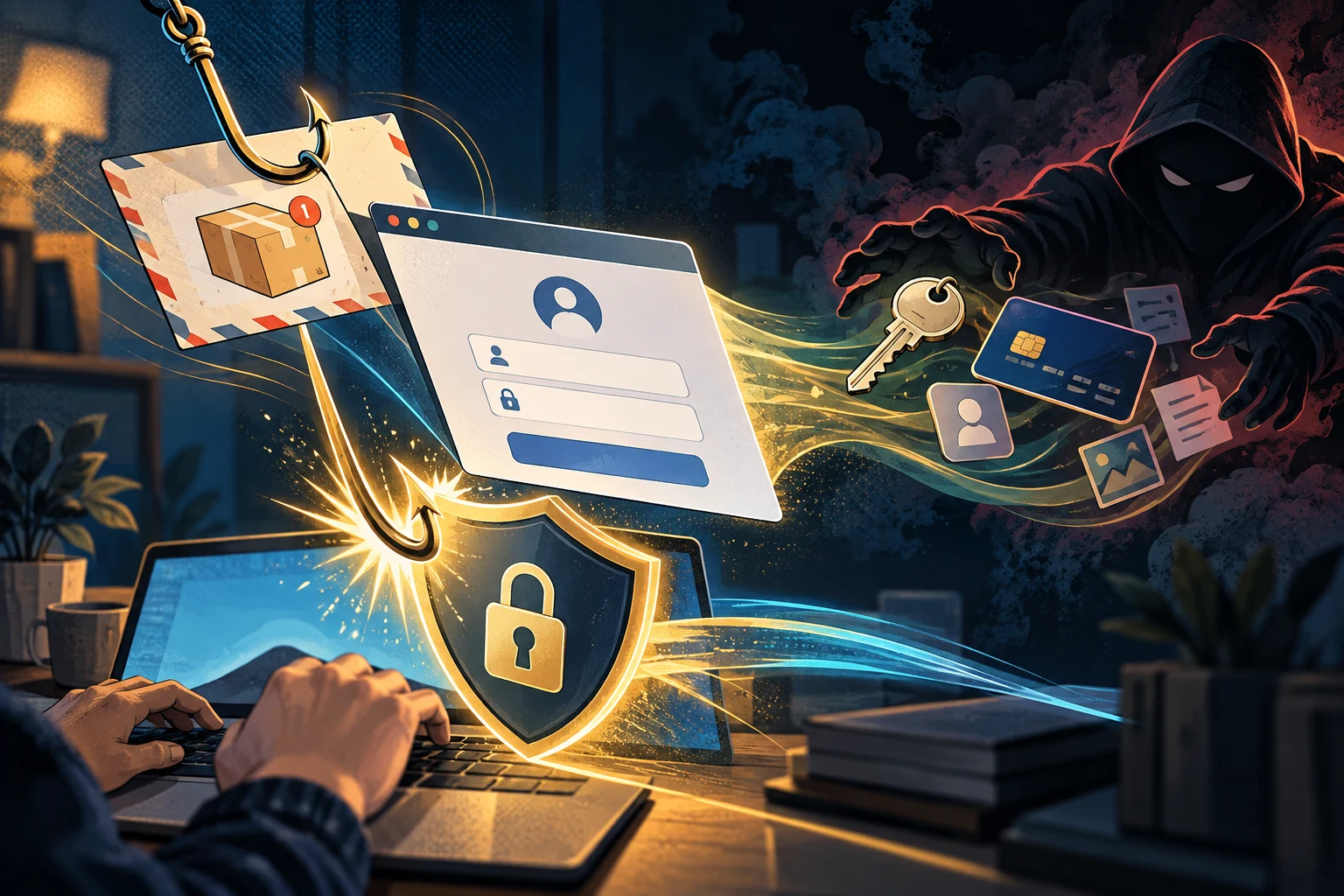
Conceptual artwork, not real people, a crime scene or evidence verifying a specific case.
Fake notification
A message mentions a parcel, unpaid bill or account problem.
Clicking a link
It leads to a counterfeit login or payment page.
Entering secrets
Passwords, card numbers or one-time passwords are entered.
Account misuse
The information may be used for unauthorised payments or account takeover.
Warning signs
HTTPS and a padlock do not establish a website’s identity.
Protective action
Open the official app yourself. Do not enter verification codes through unfamiliar links.
These stages are educational summaries. Cases may differ in order and structure. They do not establish wrongdoing by any specific person or platform.
Official source (original may be in Traditional Chinese)15 · Fake buyer and fake support: verification outside the platform
Fake buyer and fake support: verification outside the platform
If selling something leads to online-banking instructions, stop.

Conceptual artwork, not real people, a crime scene or evidence verifying a specific case.
Buyer contact
A buyer claims an order cannot be placed or payments are not enabled.
Fake support
You are told to add a private LINE account for help.
‘Verification’ instructions
They give instructions for online banking, an ATM or a payment code.
Financial loss
You authorise a transaction or disclose sensitive information.
Warning signs
A store screenshot is not enough to trust a stranger requesting financial actions.
Protective action
Check with official support on the original platform. Do not transfer money on the caller’s instructions.
These stages are educational summaries. Cases may differ in order and structure. They do not establish wrongdoing by any specific person or platform.
Official source (original may be in Traditional Chinese)16 · QR codes: check what you are authorising
QR codes: check what you are authorising
An apparent payment receipt or check may actually authorise a payment or withdrawal.
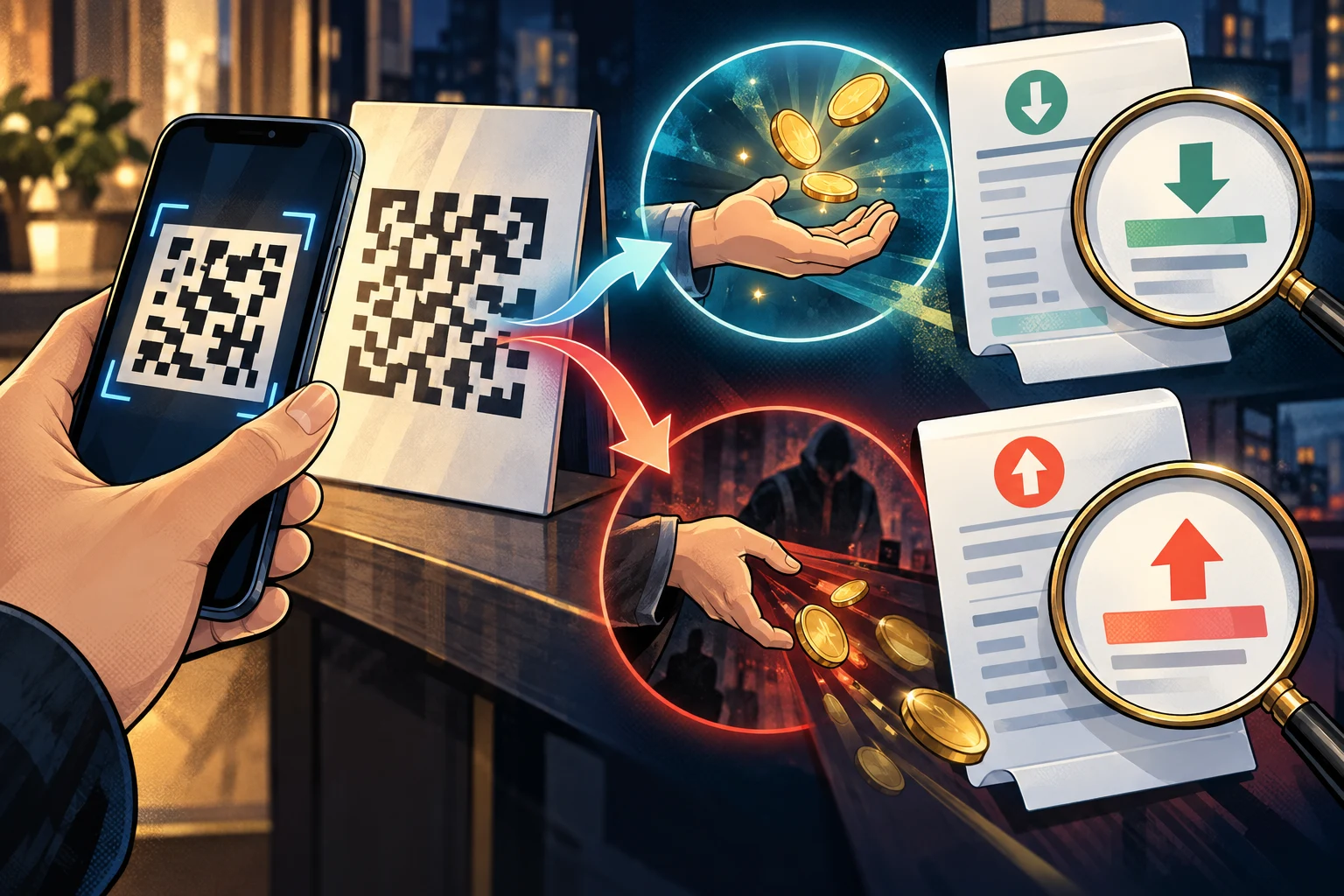
Conceptual artwork, not real people, a crime scene or evidence verifying a specific case.
Receiving a code
A stranger sends a QR code or screenshot.
A false purpose
They claim it receives money, verifies identity or removes a restriction.
Authorising action
You are asked to enter an amount, password or confirmation.
Completing a transaction
The action may actually authorise a payment or cash withdrawal.
Warning signs
Scanning a code does not verify the other party or the purpose.
Protective action
Read the recipient, amount and authorisation on the official screen before deciding.
These stages are educational summaries. Cases may differ in order and structure. They do not establish wrongdoing by any specific person or platform.
Official source (original may be in Traditional Chinese)17 · High-paying side jobs can recruit you to handle scam money
High-paying side jobs can recruit you to handle scam money
Withdrawing, forwarding money and renting out accounts are not ordinary administrative tasks.

Conceptual artwork, not real people, a crime scene or evidence verifying a specific case.
An easy high-paying job
Low entry requirements and fast earnings attract applicants.
Requesting an account
Passbooks, cards or login details are requested.
Money-handling tasks
You receive, withdraw, transfer or deliver money for someone else.
Liability risks
You may become involved in fraud or money-laundering investigations.
Warning signs
A contract, company name or salary promise does not remove the risk.
Protective action
Do not lend accounts. Verify the employer and duties; call 165 if unsure.
These stages are educational summaries. Cases may differ in order and structure. They do not establish wrongdoing by any specific person or platform.
Official source (original may be in Traditional Chinese)18 · Remote assistance: device control is not customer verification
Remote assistance: device control is not customer verification
Screen sharing and control permissions can expose financial information.
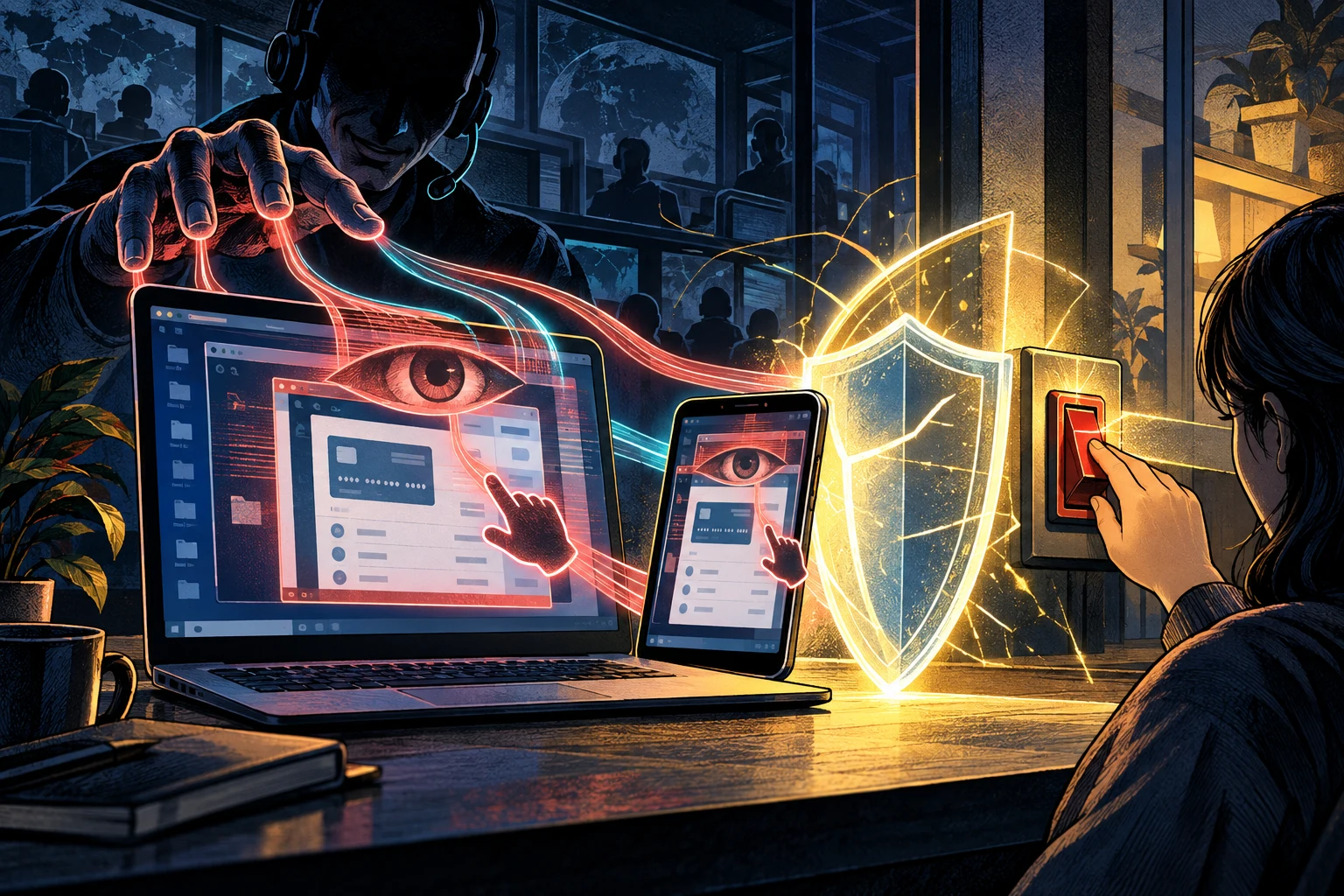
Conceptual artwork, not real people, a crime scene or evidence verifying a specific case.
Support contact
Someone approaches you about an order, refund or support.
Installing software
They send unfamiliar software or links.
Granting access
They persuade you to share your screen or allow remote control.
Sensitive actions
They watch verification codes or guide financial transactions.
Warning signs
Legitimate software can be misused. Permissions should match a necessary purpose.
Protective action
Refuse device control by strangers. If you already acted, contact your bank and 165.
These stages are educational summaries. Cases may differ in order and structure. They do not establish wrongdoing by any specific person or platform.
Official source (original may be in Traditional Chinese)19 · Recovery promises can lead to a second scam
Recovery promises can lead to a second scam
Anxiety after a scam can be exploited as a supposed refund service.

Conceptual artwork, not real people, a crime scene or evidence verifying a specific case.
Seeking help
You share your experience or receive an unsolicited message.
Guaranteed recovery
Someone claims to be a hacker, recovery agent or legal expert.
Upfront fees
They demand a deposit, tax or access permissions.
Further losses
Fees grow but the money remains unrecovered.
Warning signs
Guaranteed recovery combined with upfront payment is a warning sign requiring verification.
Protective action
Ask your bank, police and 165 for help. Do not give access permissions to strangers.
These stages are educational summaries. Cases may differ in order and structure. They do not establish wrongdoing by any specific person or platform.
Official source (original may be in Traditional Chinese)20 · Break the chain: stop, check, save and get help
Break the chain: stop, check, save and get help
You do not need to expose the whole operation. Protect your next action.

Conceptual artwork, not real people, a crime scene or evidence verifying a specific case.
Stop acting
Stop paying and sharing information.
Check independently
Find official channels yourself and check with family or friends.
Save evidence
Keep conversations, account details and transaction records.
Get help immediately
Contact your bank if you paid; call 165 if unsure.
Warning signs
Call 110 if someone pressures you at your door or there is immediate danger.
Protective action
Earlier reporting may improve the chance of interception, but recovery is not guaranteed.
These stages are educational summaries. Cases may differ in order and structure. They do not establish wrongdoing by any specific person or platform.
Official source (original may be in Traditional Chinese)Scam advice: 165. Immediate danger: 110. Already paid? Contact your bank first.